
The Complete Guide to Assisted Living: What Families Need to Know
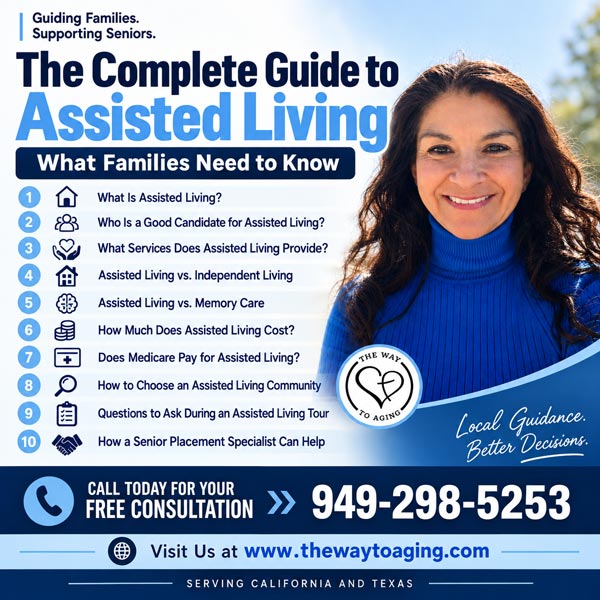

The Complete Guide to Assisted Living: What Families Need to Know
Choosing assisted living for a parent, spouse, or other loved one can be one of the most important decisions a family makes. You want your loved one to remain as independent as possible while also knowing that help is available when they need it.
Assisted living can provide that balance.
This complete guide explains what assisted living is, who may benefit from it, what services are typically provided, how much it may cost, and what families should consider when comparing assisted living communities.
What Is Assisted Living?
Assisted living is a type of senior living designed for older adults who want to maintain their independence but need assistance with some everyday activities.
Unlike a traditional nursing home, assisted living generally focuses on helping residents remain active and independent while providing personalized support when needed.
Residents typically live in a private or semi-private apartment and have access to caregivers, meals, activities, transportation, housekeeping, and other services.
The amount of assistance varies by resident. One person may only need help managing medications, while another may need assistance with bathing, dressing, mobility, and several other activities of daily living.

Who Is a Good Candidate for Assisted Living?
There isn’t one specific age when someone should move into assisted living. The decision should be based primarily on the person’s needs, safety, health, abilities, and quality of life.
Assisted living may be worth considering when an older adult:
- Has difficulty bathing, dressing, grooming, or using the bathroom independently
- Needs help managing medications
- Has experienced falls or increasing mobility problems
- Is no longer preparing nutritious meals regularly
- Has difficulty maintaining their home
- Is becoming socially isolated
- Has stopped driving or has transportation difficulties
- Needs more assistance than family members can consistently provide
- Would benefit from having caregivers available throughout the day and night
Families sometimes wait for a serious fall, hospitalization, or other crisis before discussing senior living. Starting the conversation earlier can provide more time to compare communities and make a thoughtful decision.
What Services Does Assisted Living Provide?
Services vary by community and state regulations, but assisted living communities commonly provide help with activities of daily living, often called ADLs.
These can include bathing, dressing, grooming, toileting, transferring, walking, and eating.
Many communities also provide medication management, housekeeping, laundry services, scheduled transportation, meals and snacks, emergency response systems, wellness programs, social activities, and exercise programs.
A resident’s care needs are usually evaluated before moving into the community. This assessment helps the community determine the appropriate level of assistance and associated care costs.
Because needs can change, families should ask how often care plans are reviewed and what happens if additional assistance becomes necessary.

Assisted Living vs. Independent Living
Independent living is generally designed for seniors who can manage their daily activities without significant personal care assistance.
Residents may enjoy amenities such as meals, housekeeping, transportation, fitness programs, and social activities, but personal care is usually limited.
Assisted living adds caregiver support.
For example, someone living independently might prepare for the day without assistance but appreciate having meals and transportation available. Someone in assisted living might need a caregiver to help them get dressed, manage medications, or safely take a shower.
Understanding the difference can help families avoid choosing a community that does not provide enough support.

Assisted Living vs. Memory Care
Memory care is specifically designed for individuals living with Alzheimer’s disease, dementia, and other forms of cognitive impairment.
Memory care communities or specialized memory care neighborhoods typically offer enhanced security, structured routines, dementia-focused activities, and caregivers trained to support residents experiencing cognitive changes.
Someone with mild memory problems may sometimes live successfully in assisted living, depending on their needs and the services offered by the community.
However, wandering, significant confusion, behavioral changes, or increasing safety concerns may indicate that a specialized memory care environment should be considered.

How Much Does Assisted Living Cost?
The cost of assisted living varies considerably depending on location, apartment size, amenities, and the amount of care required.
Many communities have a base monthly rate covering the apartment, meals, activities, housekeeping, and certain amenities. Personal care services may be included or charged separately based on the resident’s assessed level of care.
When comparing prices, families should ask exactly what is included.
Important questions include whether medication management costs extra, whether rates increase with additional care needs, whether transportation is included, and how often rates typically change.
The least expensive advertised monthly rate is not necessarily the resident’s final monthly cost.

Does Medicare Pay for Assisted Living?
One common misconception is that Medicare generally pays for long-term assisted living room and board.
Medicare primarily provides health insurance coverage and does not typically cover the ongoing residential costs associated with assisted living.
Depending on eligibility and circumstances, families may use personal savings, retirement income, long-term care insurance, veterans’ benefits, Medicaid programs, or other resources to help pay for care.
Because eligibility and benefits can vary significantly, families should verify coverage and financial assistance options before making decisions.
How to Choose an Assisted Living Community
A beautiful building can make a strong first impression, but families should look much deeper when evaluating assisted living.
Pay attention to how caregivers interact with residents. Are residents treated respectfully? Does the community appear clean and well maintained? Do residents seem engaged?
Ask about caregiver staffing, training, turnover, emergency procedures, medication management, nighttime staffing, transportation, activities, dining, and how changes in a resident’s condition are handled.
Also ask what circumstances could require a resident to move out.
Understanding these policies before signing an agreement can help prevent surprises later.

Questions to Ask During an Assisted Living Tour
Bring a list of questions when touring communities.
Ask about staffing levels during the day and overnight, caregiver training, monthly fees, additional care charges, medication management, emergency response procedures, activities, transportation, meals, visiting policies, and how often residents are reassessed.
Families should also ask to review the residency agreement and obtain a written explanation of fees.
If possible, visit more than once. A second visit at a different time of day can provide a better understanding of everyday life in the community.
Yolanda Lawler, MASM, RCFE
Gerontologist | Founder & CEO, The Way to Aging
Yolanda Lawler, MASM, RCFE, is a gerontologist and the Founder and CEO of The Way to Aging, helping older adults and their families navigate senior living, dementia care, geriatric care management, assisted living, memory care, residential care and the complex decisions associated with aging.
Her professional and educational background combines formal training in gerontology and psychology with hands-on leadership experience in senior living, memory care, home care, hospice-related care coordination and services for older adults.
How a Senior Placement Specialist Can Help
Families often discover that there are dozens of assisted living options in their area. Comparing them can quickly become overwhelming.
A knowledgeable senior placement professional can help identify communities that fit a person’s care needs, preferred location, lifestyle, and budget.
At The Way to Aging, our approach goes beyond simply providing a list of senior living communities. We help families understand their options and navigate the placement process with professional guidance.
Our experience in gerontology and senior living allows us to look at important factors such as care requirements, safety, environment, services, costs, and long-term suitability.

Finding the Right Assisted Living Community
The goal isn’t simply to find an available room. It’s to find an environment where your loved one can receive appropriate support while maintaining as much independence, dignity, comfort, and quality of life as possible.
Take time to understand your loved one’s current needs and consider how those needs might change. Compare multiple communities, ask detailed questions, understand the costs, and involve your loved one in the decision whenever possible.
You don’t have to navigate the process alone.
The Way to Aging provides complimentary senior placement assistance for families searching for Assisted Living, Memory Care, Independent Living, and Board & Care options in California and Texas.
Looking for an assisted living place for Mom or Dad?
Contact The Way to Aging for a complimentary consultation and personalized senior placement assistance.